

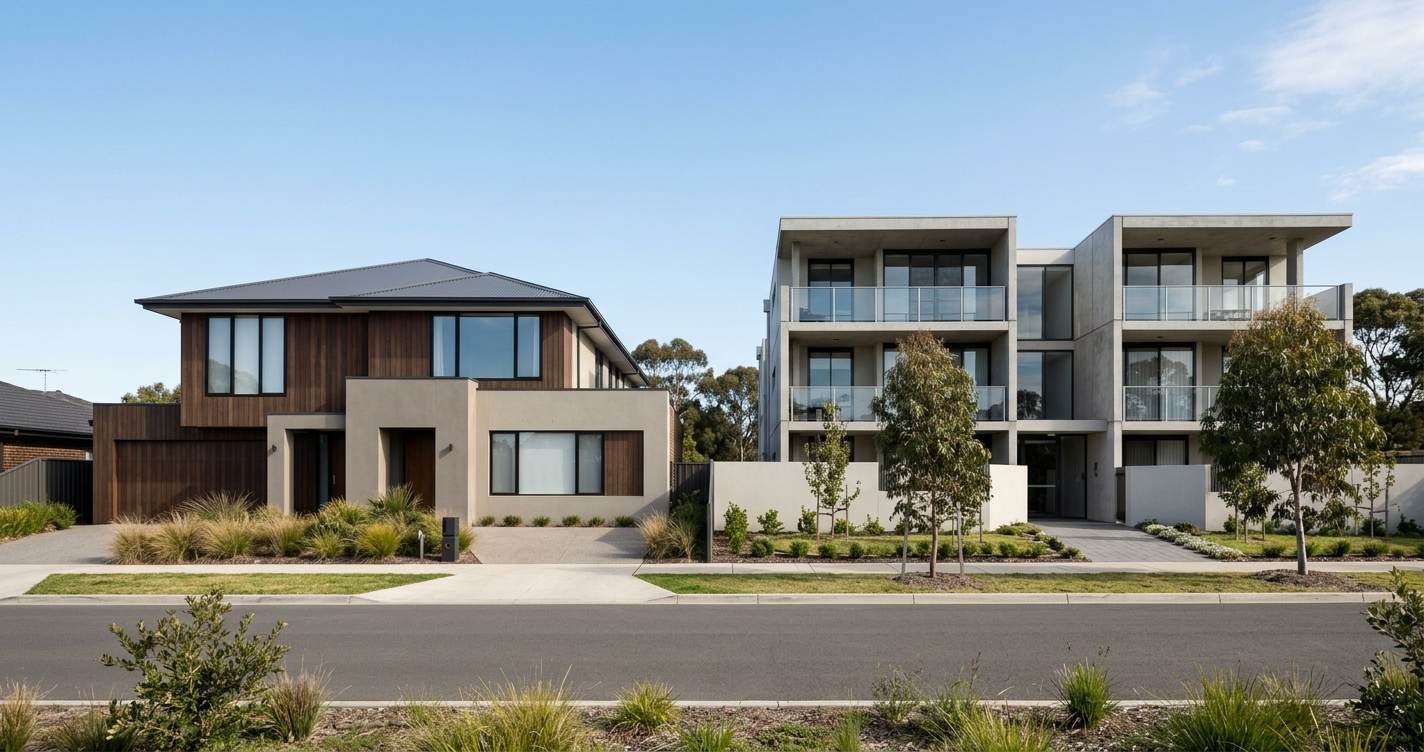
For SMSF trustees weighing up a house against a unit, it helps to understand where these residential options fit within the broader classes of property valued for SMSFs. It’s a bigger decision than it looks, because the choice affects what the fund can actually earn, what it costs to hold, and how the property gets valued every year when the fund’s accounts are prepared.
This guide walks through the practical differences, with a focus on valuation and long-term growth, so you can go into the decision with your eyes open.
Summary
Houses and units behave differently inside a super fund, and the gap often shows up in places trustees don’t expect. A house usually gives you more land, which tends to drive long-term capital growth in Australian capital cities. A unit usually costs less to buy and can produce a stronger rental yield, but you share the land with other owners and pay strata levies that come out of the fund’s cash flow.
Valuation is where the two diverge most. A house is valued as a whole. A unit is valued on its share of the land and building, usually through its unit entitlement, and the value can be pulled down by things like a poorly managed owners corporation or a weak sinking fund. Every year, the fund needs a market value at 30 June, so these differences affect your annual compliance work as well as your eventual sale.
Before buying, trustees should look at land content, strata health, rental demand in the specific suburb, depreciation schedules, and how the purchase will be financed. If the numbers are close, the land component and the quality of the body corporate often decide it.
Why the House vs Unit Question Matters in an SMSF
Your super fund is a different investor to you personally, and choosing between residential and commercial property in an SMSF involves different rules, costs and practical considerations.It has no salary to fall back on, the trustees have to meet the sole purpose test, and the fund pays tax at 15% on income in the accumulation phase, or nothing in pension phase, with capital gains on assets held more than 12 months generally taxed at an effective 10% (after the one-third discount). Those rules mean the cash flow and growth you’re chasing in a super fund may look different to what you’d target in your own name.
A house and a unit can both be a legitimate SMSF asset. The problem is when trustees pick one based on the purchase price alone, without working through what the fund pays to hold it.
The Main Differences Between Houses and Units
Land content
Land is the part of a property that generally grows in value, while buildings depreciate. A house usually sits on a larger share of the land. A unit in a block of apartments has a much smaller share, so its growth depends on how much the whole site is worth and how many people share it.
Ask the valuer or check the title for the land share, and look at how the unit’s value compares with similar units in the same block. A low-rise block on a large site will generally give you more land content than a high-rise tower on a small site, even if the purchase prices look similar.
Unit entitlements and how the value is split
In a strata scheme, each lot has a unit entitlement. This is a number that sets each owner’s share of the common property and their share of levies. It’s usually set when the strata plan is registered, and the entitlement often reflects the size, location and value of the lot at that time.
Unit entitlements matter for valuation because two units of similar size can sit at different entitlements, which can affect how much each one is worth relative to the whole block. Trustees who buy off the plan or in a newer development should check the entitlement schedule before signing.
Strata levies and sinking fund
Owners corporation levies are the regular payments for maintenance, insurance and building repairs. For an SMSF, those levies are a cost that comes out of fund cash, so they reduce the net return.
The sinking fund, also called the capital works fund, is the building’s savings account for big repairs like roof replacement, lift upgrades or waterproofing. A healthy sinking fund supports value. A weak one, or a building with a history of special levies, can put buyers off and reduce the price a valuer will adopt. Ask for the last few years of annual general meeting minutes, the current strata budget and the building’s capital works plan before you commit.
Depreciation
Both houses and units can have depreciation deductions, but the amounts differ. Eligible buildings may generate capital works deductions over time, while deductions for plant and equipment items such as carpets, air-conditioning and appliances depend on the asset’s history, acquisition date and use. SMSFs are generally restricted from claiming deductions for the decline in value of certain second-hand assets in residential rental properties. In a strata block, some items belong to the owners corporation rather than the lot owner, so the deductions available to your fund can be smaller than you’d expect.
A depreciation schedule from a quantity surveyor can help show what the fund can claim, though the tax treatment inside a super fund is different from an individual’s, so check the numbers with your accountant.
Rental yield and vacancy
Units often produce a higher gross rental yield than houses in the same suburb, because the purchase price is lower. The trade-off is that net yield can be closer to house yields once levies, management fees and vacancy are factored in. Units in suburbs with strong demand from renters tend to hold up better, while units in oversupplied areas can sit empty for longer.
Houses in family-friendly suburbs often attract longer-term tenants, which can reduce turnover costs. Look at local vacancy rates and the type of tenant you’d realistically attract, not just the headline yield.
How Valuation Affects an SMSF Property Investment
Every SMSF must determine the market value of its assets at 30 June each year for its financial statements and annual return. Trustees can value the property themselves in some cases, but an independent valuation is generally safer, particularly for a property that’s hard to value or where the auditor has questions.
Valuing a house
A house is usually valued using comparable sales of similar houses nearby, adjusted for land size, condition, improvements and location. Because houses are usually the only dwelling on their title, the valuer has a clear picture of what’s being sold.
Valuing a unit
Units are harder. A valuer will usually compare sales within the same building first, then look at similar units in nearby blocks, and adjust for the floor level, aspect, car spaces, unit entitlement, and the condition of the building. The strata situation, including the sinking fund and any known defects or pending levies, can also affect the figure.
Some units sell at a discount to comparable houses even in good suburbs, which is why a unit’s growth can look flat for a while and then jump when the building or the area changes.
Why the valuation matters for growth
Your fund’s returns are measured against valuations. If a unit is valued too low, the fund’s reported growth looks weaker than it really is. If it’s valued too high, the fund may carry an asset at a figure it can’t realise. Either way, a clear, well-supported valuation each year keeps the fund’s records accurate and gives you a realistic picture of how the investment is going.
Common Misconceptions
“A unit is always a cheaper way into property.” A unit has a lower entry price, but levies, limited land and a weaker sinking fund can cut into the return over time. The cheaper option isn’t always the better one.
“Houses always grow faster.” Houses often have stronger land content, which helps long-term growth, but the outcome depends on the suburb, the supply of new housing nearby and the state of the local market. Some units in well-located areas have outperformed houses in the same postcode for long stretches.
“The valuation is just a formality.” For an SMSF, the annual valuation feeds directly into the fund’s financial statements and its audit. A rushed or weakly supported figure can create problems later, especially if the property is sold or the fund moves into pension phase.
“If the fund buys the property, it can use it.” It can’t. The sole purpose test and the in-house asset and related party rules mean an SMSF generally can’t acquire residential property from a member or related party, and it can’t let residential property to a member or their relatives. Check the rules before you buy from anyone connected to the fund.
Practical Checks Before Buying an Investment Property Through Your SMSF
Before committing, most trustees should work through a short checklist:
- Land content and the land share attached to the title
- Unit entitlement schedule (for units)
- Strata levies, budget and sinking fund balance
- Minutes from recent owners corporation meetings
- Any known building defects, special levies or legal disputes
- Rental demand, vacancy rates and comparable rents in the suburb
- Depreciation schedule from a quantity surveyor
- Finance structure, including whether a limited recourse borrowing arrangement is involved
- Whether the purchase is from an arm’s-length seller
If the property will be borrowed against under a limited recourse borrowing arrangement, the lender’s requirements and the property’s eligibility will also shape the decision. Those rules can be tighter for units in some developments, so check early.
Questions Trustees Often Ask Next
Is it better to buy a house or a unit in an SMSF?
There’s no universal answer. A house usually offers stronger land content and simpler strata issues. A unit can offer a lower entry price and potentially stronger rental yield, but it comes with levies and a shared building. The better choice depends on your fund’s cash flow, time horizon and the specific property.
Does the SMSF need to get a valuation every year?
Yes. The fund needs market values for its assets at 30 June each year for its financial statements. Trustees should discuss with their accountant and auditor how the valuation will be prepared and what evidence they’ll need to keep.
Can an SMSF buy a unit in a development that’s still being built?
Off-the-plan purchases can be complex inside an SMSF, particularly around timing, finance and the contract terms. Trustees should get legal and accounting advice before signing anything, and check that the purchase meets the fund’s investment strategy and the relevant super rules.
Conclusion
Houses and units can both work inside an SMSF, but they reward different kinds of attention. Houses tend to offer more land and simpler strata issues, while units can offer lower entry costs and stronger yields, with the trade-off of levies and shared building risk.
Before buying, look closely at land content, unit entitlements, the strata budget and sinking fund, and what the fund will actually net after costs. Those details shape both the growth and the annual valuation.
Frequently Asked Questions
Is a unit a good SMSF investment in Australia?
It can be, particularly where the building is well managed, the sinking fund is healthy and rental demand is strong. The key is to compare the net return after levies, not just the purchase price.
Why do units sometimes grow slower than houses?
Units share the land with other owners and usually have less land content, which tends to limit long-term growth. Strata costs and building age can also affect buyer demand.
What is a unit entitlement and does it affect value?
A unit entitlement sets a lot’s share of common property and levies within a strata scheme. It can influence how a unit is valued, particularly when comparing lots within the same building.
Who values a property for an SMSF?
Trustees can sometimes value the property themselves, but an independent valuer is usually the safer choice, especially for units or properties where the value is hard to pin down.
Can an SMSF buy a house from a family member?
Generally not if it’s residential property. Acquisitions from related parties are restricted under the superannuation rules, so check with your adviser before going ahead with any transaction involving a member or relative.
Does depreciation help an SMSF investment?
It can, but the benefit depends on the property, the age of the building and the fund’s tax position. A quantity surveyor’s schedule and your accountant’s advice will show what’s realistic.
Thinking about valuing a house or unit for your SMSF?
SMSF Property Valuers can provide an independent market valuation for annual reporting, acquisitions and other fund matters. Call us on +61 438 080 786 to talk through what you need, and we can help you work out the right approach for your fund.